Foreign trade
1/8Collect exports, pay imports
Receive payments from buyers across 130+ countries in their local currencies and pay suppliers with documentary compliance included. Settle in USD or stablecoins.

We operate local entities, partners and rails so you can move money across Latin America without building one integration per market.
Collect, pay and convert. Settle in stablecoins.
For merchants or your end-users, via API or portal.
Issue accounts in each client’s own name. KYC/KYB, custody and compliance on our side. White-label: your clients see your product.
A single API for pay-in and pay-out over each country’s local rails with automatic real-time reconciliation and USDT/USDC settlement.
Companies use Dinaria to collect, pay, convert and operate across multiple countries.
These are some of the most common use cases.
Receive payments from buyers across 130+ countries in their local currencies and pay suppliers with documentary compliance included. Settle in USD or stablecoins.
Accept dynamic QR, bank transfer or payment links at checkout and settle in your currency or stablecoins. Reconciliation against every order is automatic.

Users of exchanges, gaming and investment apps top up and withdraw using their country’s local payment methods, with screening included and stablecoin settlement.
Sell tickets with QR, bank transfer or card: every payment reconciles automatically and a webhook alerts you within seconds to issue the ticket, even during sales spikes. Pay producers anywhere in the world.

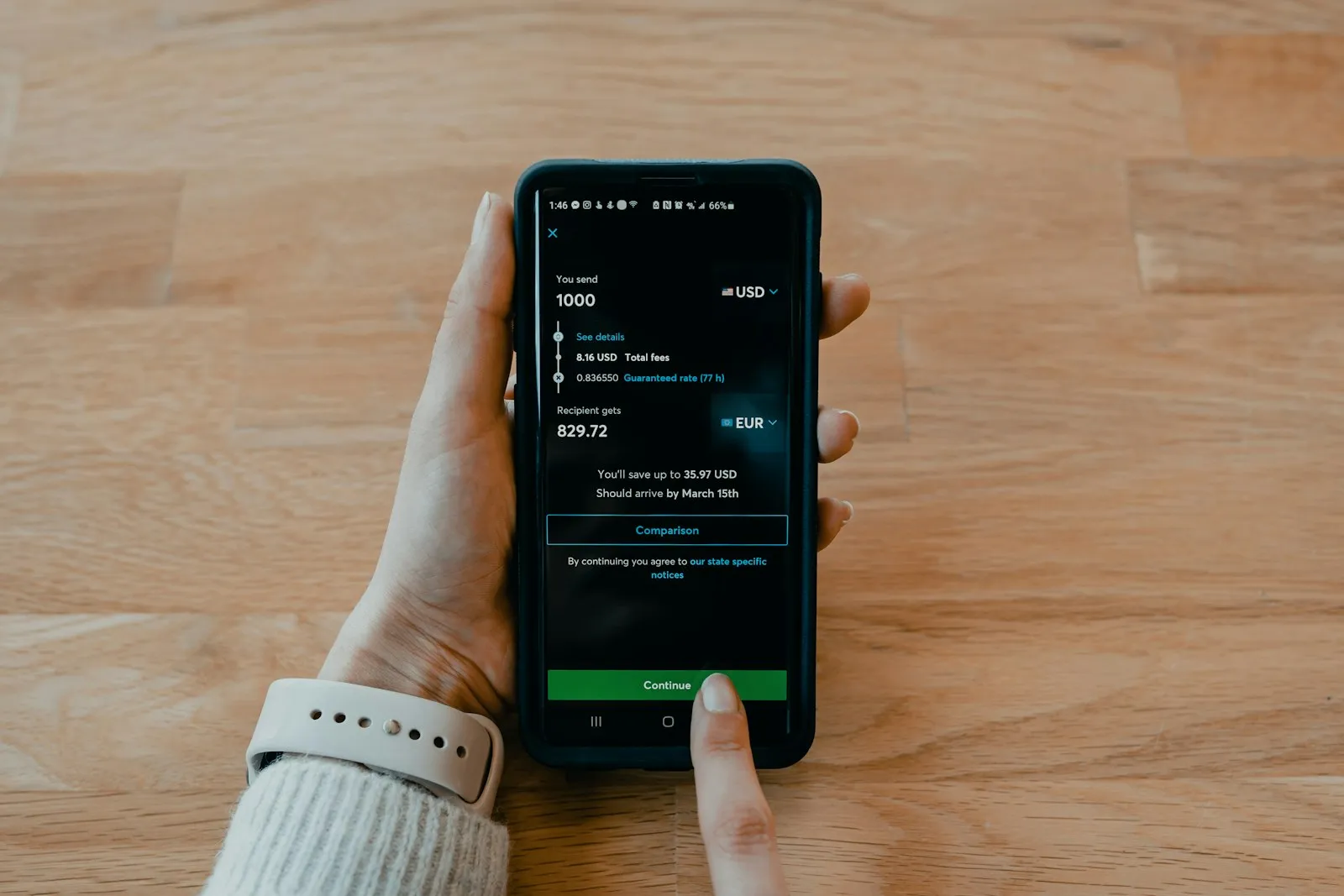
Pay remittances from a USD or stablecoin balance, delivered locally by bank transfer or mobile payment. Screening and pricing on our side.
Pay employees and contractors in their country, over their local rail. Everyone gets paid in their currency; you fund in yours.

Brokers bounce third-party transfers. With Dinaria your client funds as the named sender and receives withdrawals into an account in their own name.

Move balance between your currencies at competitive rates, with each currency’s position visible in real time, movement by movement.

A consistent REST API, idempotency on every operation, signed webhooks, a self-serve sandbox, full observability and documentation optimized for developers and AI agents.
Dinaria is a financial technology company providing collections, payouts, currency conversion and stablecoin settlement infrastructure for companies operating primarily across Latin America. Dinaria LLC is a Money Services Business (MSB) registered with FinCEN in the United States. The infrastructure is available via REST API or through a no-code web portal.
Dinaria Connect issues global accounts in each of your clients’ own names: USD (ACH, Wire, SWIFT), EUR (SEPA with a dedicated IBAN) and local LatAm accounts (CLABE in Mexico, PIX key in Brazil, wallets in Peru, Bre-B in Colombia), with custody, FX conversion and payouts; your client is the account holder. Dinaria Pay is the collections-and-payouts API over LatAm’s local rails (PIX, SPEI, CBU/CVU, PSE, Yape and Bre-B, among others) with automatic reconciliation and USDT/USDC settlement; the operating account belongs to the merchant and their users simply pay and get paid.
Dinaria processes payments across more than 130 countries and has local presence in 10 markets: Argentina, Brazil, Chile, Peru, Bolivia, Ecuador, Colombia, Mexico, the United States and Europe (SEPA zone). Local rails include, among others, PIX in Brazil, SPEI in Mexico, CBU/CVU transfers in Argentina, PSE and Bre-B in Colombia and Yape in Peru.
Fiat: USD, EUR and LatAm local currencies (BRL, ARS, MXN, COP, PEN, BOB, CLP, among others). Stablecoins: USDT and USDC - for cross-border settlement as well as holding and converting balances.
Yes. Dinaria LLC is a Money Services Business registered with FinCEN (United States), registration No. 31000321315533. Compliance is built into the infrastructure: KYC/KYB, AML screening (PEP, sanctions and adverse media), transaction monitoring and an immutable hash-chained audit log.
Onboarding (KYB) takes hours. A typical API integration - with a sandbox and signed webhooks - goes live in about two weeks. If you prefer not to write code, the web portal works from day one: client onboarding, collections, conversions, payouts, reconciliation and reporting.
Let's set up a demo and tailor your integration.Tell us your case and we'll show you how we solve it.
We'll reply within 24 business hours to the email you provided.